said my toddler daughter when I offered her a new (for her) vegetable to eat. I wondered how she could make a decision that she doesn't like it? Especially since she had never tasted this vegetable before.
We are all guilty of doing this. Be it a new vegetable, a new dish, a new religion, a new belief system, a new sport, or a new 'thing'. Is it a pre-conceived notion? Is it our gut instinct? To make such a hard choice at such a young age is very surprising. It is understandable for adults to have pre-conceived ideas, but for a kid with limited experience..
I remember a friend of mine stating that he doesn't like skiing. I asked what it was that he doesn't like specifically. He could not answer that. In fact, he had never been skiing and he had already made up his mind that he isn't going to like it! Wow. Only if we could make up our minds on positive things that easily ("I am going to try this AND I am going to love it").
The moment we utter the words "I don't like it", especially without experiencing it, we close our minds. We close our minds to new experiences, new joys, new possibilities and new frontiers. We should always be open to anything that comes our way. I agree that you have all the right to not like something once you have experienced it. How will you know that you are a gifted piano player if you never expose yourself to the piano? My philosophy has always been that you expose a person at an young age to a variety of experiences. See how that person reacts to each and make training decisions based on that.
Let's open up our minds to everything that comes our way, experience them, and then make a decision as to whether we like them or not.
Wednesday, November 01, 2006
Tuesday, October 31, 2006
Beauty is only skin deep - part II
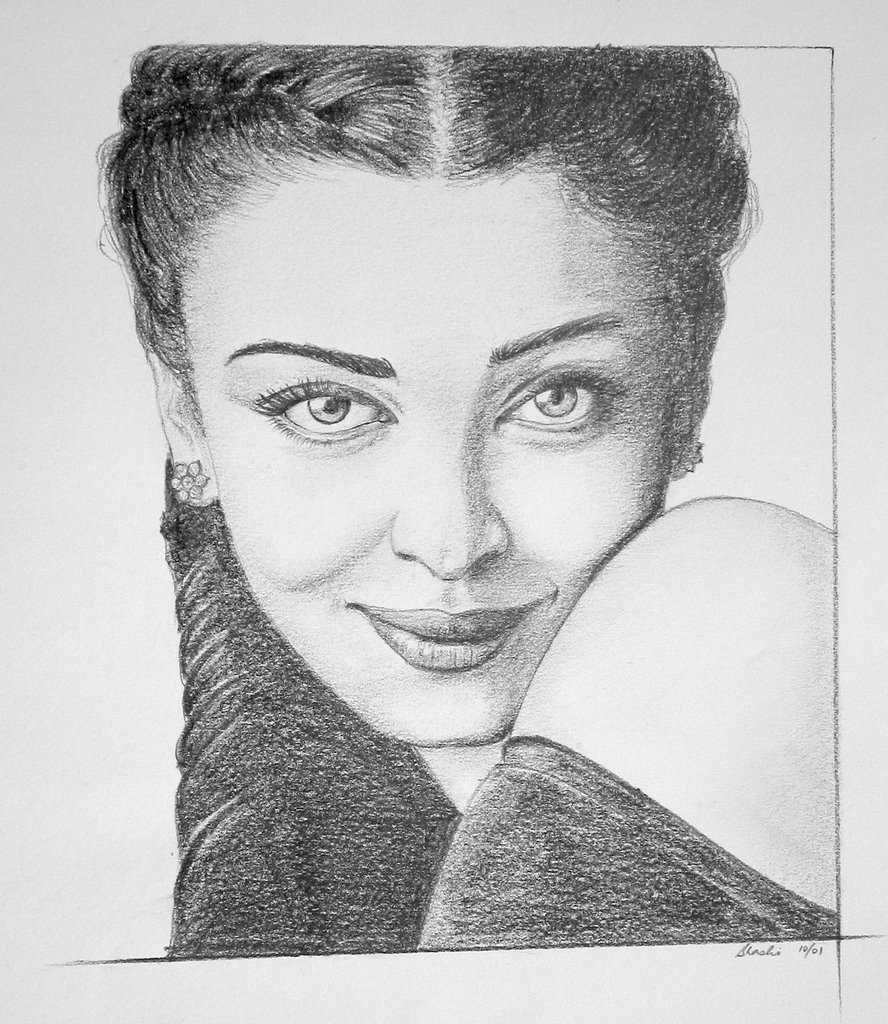
Earlier I talked about how the media was defining what is beautiful. Media in every country tries to define what is beautiful, and also tries to 'create' people who match its fantasy. It is a well known fact that photoshop is a very oft used tool in the media circles. Look here for a recent example which became public.
We need our younger generations to be confident and self assured. And the media is not helping us here. Nothing is flawless. In fact, the flaws and imperfections are what add color and variety to the nature. We should realize that it is the whole personality and not just the looks that matter. We should strive to build self esteem and a positive image in our children.
I am happy to see that at least somebody is making an effort in this regard. Check out Campaign for Real beauty, and while you are there check out the cool short film 'evolution'. It paints a good picture of how 'beautiful' images are created.
If you ask me, the model looks much more beautiful before the neck elongation and eye enlargement. Well, that is my opinion.
Until later, appreciate natural beauty.
PS: All art (photos, sketches, etc.) on this blog are my creations.
Tuesday, October 24, 2006
Smart car?
I am talking about "the smart car". The one Mercedes Benz is planning on introducing in the US. A few years ago I saw this car in France and I was impressed by its cuteness and compact design. I have seen people use it on city streets. Parking it is a breeze. In fact, you can park two in a single car garage. It is like a motorbike, but you get protection from the weather as well as the road hazards. It is a great solution for city driving, especially in congested places. This would be a great solution to the crowded streets of India.
Today, I saw a smart car on I-90 while driving home. I was almost shocked that someone had the nerve to take it on a freeway. I know they talk about the 'tridion safety cell' and all that, but seeing a smart car on a freeway along with an 18-wheeler is scary. In accidents, people get crushed to pulp in much bigger cars. One of the selling points of vans and SUVs is their safety factor. Imagine driving along on a freeway in this puny car, and when the time to merge comes, you floor the gas pedal, and nothing happens!
It is a great car for city driving. Its gas mileage, its compactness and ease of maneurability should be a boon for congested cities. But, the other issue is with capacity. In places like Bangalore (where I see this car as being a perfect fit), it isn't uncommon to see a family (couple and two kids) riding in a scooter or motorcycle. So, a two seater car would be a hard sell. Unless, they modify it for Asian markets to accommodate at least one more (small) person.
Today, I saw a smart car on I-90 while driving home. I was almost shocked that someone had the nerve to take it on a freeway. I know they talk about the 'tridion safety cell' and all that, but seeing a smart car on a freeway along with an 18-wheeler is scary. In accidents, people get crushed to pulp in much bigger cars. One of the selling points of vans and SUVs is their safety factor. Imagine driving along on a freeway in this puny car, and when the time to merge comes, you floor the gas pedal, and nothing happens!
It is a great car for city driving. Its gas mileage, its compactness and ease of maneurability should be a boon for congested cities. But, the other issue is with capacity. In places like Bangalore (where I see this car as being a perfect fit), it isn't uncommon to see a family (couple and two kids) riding in a scooter or motorcycle. So, a two seater car would be a hard sell. Unless, they modify it for Asian markets to accommodate at least one more (small) person.
Tuesday, October 17, 2006
Passport photography
I have always created my own passport photographs. Who wants to pay anywhere from $8 to $20 for a pair of passport photos, when they can be had for as little as $0.20. I used to figure out the ratio of the size in the image finder in my camera to the printed image. And determined, using a template, where the head should be so that I get the correct sized picture for a passport photograph. This was cumbersome, and involved a fair amount of trial and error. And, to top it all, I had to wait until I shot the whole roll of film to get my passport photos. But, once I got a good negative, it was good for a year.
Recently I had the need for a passport photo and I tried using my tried and trusted formula with my digital camera. It worked fairly well, and then I found this site which details how one can create an accurate passport photograph from a digital image. This was awesome. I had not thought of resizing the image at all, duh. This works great, but I would make a minor modification to the steps in order to get awesome photos that meet the standards:
This will yield a professional looking passport photo. Print the digital image on your own photo printer or at any convenient store photo printer for as little as $0.20 for a pair! It always pays to learn new tricks in Photoshop.
Of course, this assumes that you have Adobe Photoshop, and good scissors wielding skills.
Recently I had the need for a passport photo and I tried using my tried and trusted formula with my digital camera. It worked fairly well, and then I found this site which details how one can create an accurate passport photograph from a digital image. This was awesome. I had not thought of resizing the image at all, duh. This works great, but I would make a minor modification to the steps in order to get awesome photos that meet the standards:
- After the step where you do a fixed size marquee, instead of just copying the image, crop it.
- Choose the lasso selection tool and click on the background.
- Select as much of the background as accurately as possible using the +- selection.
- Use a Feather value of 5 - 15 depending on how the picture is.
- Now, adjust the Levels such that the background fades to white.
- Continue to the step of creating a 4x6 template in the original tutorial.
This will yield a professional looking passport photo. Print the digital image on your own photo printer or at any convenient store photo printer for as little as $0.20 for a pair! It always pays to learn new tricks in Photoshop.
Of course, this assumes that you have Adobe Photoshop, and good scissors wielding skills.
Thursday, August 03, 2006
Power of questions ...
I was watching the movie "16 blocks" last weekend and Mos Def asks Bruce Willis a riddle, which goes something like this:
"Imagine you are driving through a severe hurricane and at a bus stop you see three people: an old lady in need of immediate medical care, your best friend and the love of your life. You only have room in your car for one person. Who do you pick up?"
Everyone will start rationalizing at this moment. Should I save the life of an old woman, or my best friend or the love of my life? Who do I pick, and what will it say about me? What will happen to the rest? Whose life is more important? More important to whom? And so on and so forth.
This is where the power of questioning comes. Realize that a question can either open doors or close them depending on how it is posed. The way a question is posed can subconsciously inject unstated and unnecessary conditions into the picture (Riddles are deliberately coined with the wrong question to lead you astray).
Questions can be empowering "How do you feel about what has happened so far?" or dis-empowering "Why did you not meet the schedule?".
Questions can be open-ended "What do you think about this idea?" or closed ended "Do you agree with this decision?".
Questions can be confrontational "why did you do that?".
Questions can be accusatory "Do you know that this whole company is going down because of what you did?".
Questions can be thought-provoking "what could we have done to avoid this?".
In the 16 blocks situation, the question can easily box you into a corner. "Whom would you pick?" seems to indicate that you have only one choice: to pick one of them. Most people put this subconscious condition that the choice is restricted to just picking one of the three people.
Let us now look at a different approach in framing the same question, and the doors it opens: "What would you do in this situation?".
Hah. What could I do in this situation? I could pick one of the three people and drive off. I could give the car to two of them and they can drive off leaving me behind. This never seemed possible with the pre-conceived notions we had earlier. I could drive off as fast as possible and get more help. The possibilities are limited only by ones imagination.
We get the results we want by asking the right questions in the right way. The right way to find solutions is to know how to ask.
In the end, Bruce Willis answers "I will give the car to my best friend and tell him to take the old woman to a hospital. I will stay with the love of my life".
"Imagine you are driving through a severe hurricane and at a bus stop you see three people: an old lady in need of immediate medical care, your best friend and the love of your life. You only have room in your car for one person. Who do you pick up?"
Everyone will start rationalizing at this moment. Should I save the life of an old woman, or my best friend or the love of my life? Who do I pick, and what will it say about me? What will happen to the rest? Whose life is more important? More important to whom? And so on and so forth.
This is where the power of questioning comes. Realize that a question can either open doors or close them depending on how it is posed. The way a question is posed can subconsciously inject unstated and unnecessary conditions into the picture (Riddles are deliberately coined with the wrong question to lead you astray).
Questions can be empowering "How do you feel about what has happened so far?" or dis-empowering "Why did you not meet the schedule?".
Questions can be open-ended "What do you think about this idea?" or closed ended "Do you agree with this decision?".
Questions can be confrontational "why did you do that?".
Questions can be accusatory "Do you know that this whole company is going down because of what you did?".
Questions can be thought-provoking "what could we have done to avoid this?".
In the 16 blocks situation, the question can easily box you into a corner. "Whom would you pick?" seems to indicate that you have only one choice: to pick one of them. Most people put this subconscious condition that the choice is restricted to just picking one of the three people.
Let us now look at a different approach in framing the same question, and the doors it opens: "What would you do in this situation?".
Hah. What could I do in this situation? I could pick one of the three people and drive off. I could give the car to two of them and they can drive off leaving me behind. This never seemed possible with the pre-conceived notions we had earlier. I could drive off as fast as possible and get more help. The possibilities are limited only by ones imagination.
We get the results we want by asking the right questions in the right way. The right way to find solutions is to know how to ask.
In the end, Bruce Willis answers "I will give the car to my best friend and tell him to take the old woman to a hospital. I will stay with the love of my life".
Subscribe to:
Posts (Atom)